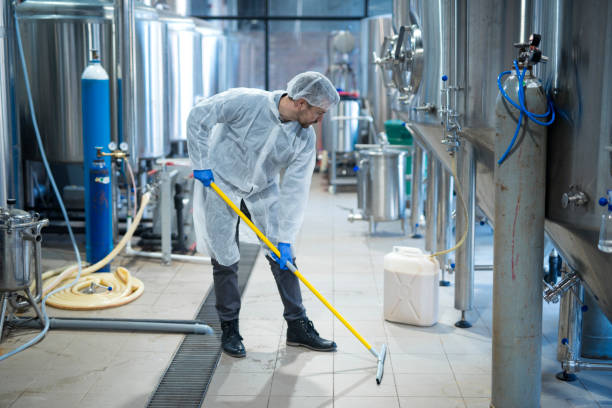


I’ve worked around industrial setups a few times, and honestly, they always felt like giant metal beasts that never sleep. The noise, the dust settling on everything like it owns the place, and that weird smell of machines overheating even though the engineers swear everything is “perfectly under control.” Somewhere in that chaos, there’s this super underrated thing people forget exists altogether — Industrial Factory Cleaning Services.
Funny thing is, whenever someone talks about cleaning, most folks imagine mops and maybe a vacuum with a slightly loud hum. But factories? That’s a whole different universe. Cleaning there isn’t about “tidying up,” it’s about keeping the entire operation alive, safe, and not falling apart like an overloaded Jenga tower.
Why factories act like messy teenagers
One thing I noticed while visiting an automotive plant years ago is how factories kind of behave like teenagers. They keep making a mess faster than you can clean it. If you turn your back for five minutes, powder residue appears like magic, or oil leaks from a machine that was “fixed yesterday.”
And you can’t ignore it, because even a tiny layer of dust on some machines affects output quality. Production managers panic when the numbers dip even slightly because apparently “one percent inefficiency over a month is like setting money on fire” — their words, not mine.
That’s why companies depend so heavily on Industrial Factory Cleaning Services. And trust me, these cleaning teams aren’t your everyday cleaners. They’re more like industrial surgeons who just happen to wear overalls instead of lab coats.
The weirdly complex side of industrial cleaning
There’s this myth online that industrial cleaning is just heavier mopping. And that’s the kind of myth that gets laughed at in Reddit threads where facility managers hang out.
The real deal is way more intense. You have high-powered vacuums that can probably suck your soul out if you stand too close. There’s machine degreasing that smells like it could melt through a spaceship hull. Then you’ve got deep cleaning for ventilation systems that trap dust with the enthusiasm of a clingy ex.
A friend of mine who works in HVAC said once that industrial vents collect more grime in three months than some homes do in three years — which is both disgusting and kinda impressive.
A small story because articles feel weird without one
I remember visiting this food processing factory with a conveyor system running literally from one end of the hangar to the other. I wasn’t even involved in the cleaning team, but I watched this worker spend nearly an hour scrubbing under a belt because “just one crumb can attract bugs, and bugs attract shutdowns.”
He said it while laughing but honestly you could tell it was one of those jokes based on trauma.
And that’s when it hit me how cleaning in such places isn’t about aesthetics. It’s survival. The whole production takes a hit if the cleaning isn’t perfect, which is ironic because the workers themselves don’t aim for perfect — just functional perfection, if that makes sense.
Why companies don’t try to do it themselves anymore
Maintaining an industrial setup is already expensive. If you add a full-time internal cleaning team, you’re basically running a mini cleaning company inside your main company. Most factories already have too many internal teams fighting for budget.
Plus, the training alone is wild. Imagine teaching someone how to clean a space where one wrong wipe can create static and that static can mess with sensors worth more than your yearly salary. Not ideal.
So outsourcing has quietly become the smart thing to do. It’s one of those decisions companies don’t brag about publicly but everyone agrees is the best move behind the scenes.
Online chatter and the surprising popularity of cleaning videos
Something kinda funny I’ve noticed lately is how “cleaning videos” are trending on TikTok and YouTube Reels. People actually love watching high-powered scrubbing, pressure washing, and dust removal in industrial areas.
I saw a clip of a guy cleaning a factory floor with a massive machine that looked like a Zamboni, and the comments section was like, “bro this is satisfying” and “I need this for my room.”
It’s weirdly wholesome that thousands of people enjoy watching industrial cleaning even though they probably have never stepped inside a factory.
The financial angle nobody talks about
There’s this small financial detail most companies don’t mention unless you push them: dirty machines cost more money. When filters clog or conveyor belts gather debris, energy consumption actually goes up.
Think of it like your phone overheating when you play a heavy game with 15 apps running in the background. It drains the battery like crazy. Factories face that exact thing — just on a scale where the “battery” is a monthly electricity bill that looks like a phone number.
One maintenance supervisor once told me that skipping deep cleaning for two months cost them almost 12 percent more power usage. Twelve percent doesn’t sound huge at first, but multiply that with factory-level bills… yeah, it hurts.
What makes the best cleaning teams stand out
This is one of those topics where experience matters more than fancy marketing lines. The best cleaning teams have this weird quiet confidence. They walk around a facility like they’ve worked there for years even if they came in ten minutes ago.
And they don’t freak out when something looks complicated. They’ve seen worse. Like, way worse.
I once saw a team clean a high-ceiling beam using a vacuum extension so tall it looked like they were operating a giant robot antenna. They didn’t blink. Just cleaned and moved on.
Wrapping this up without trying to sound too neat
Industrial spaces are loud, complicated, messy, and kind of amazing in their own way. Keeping them running smoothly takes more than tools and engineering. It takes cleaning teams who understand the strange ecosystem of dust, oil, production speed, and the thousand tiny things that can go wrong.
And honestly, without proper Industrial Factory Cleaning Services, half the factories we rely on daily would probably slow down to a crawl. Or worse, come to a full stop.